
The Invisible Tapestry: How Co-Creative Design Processes Weave Emotion and Function into Living Spaces
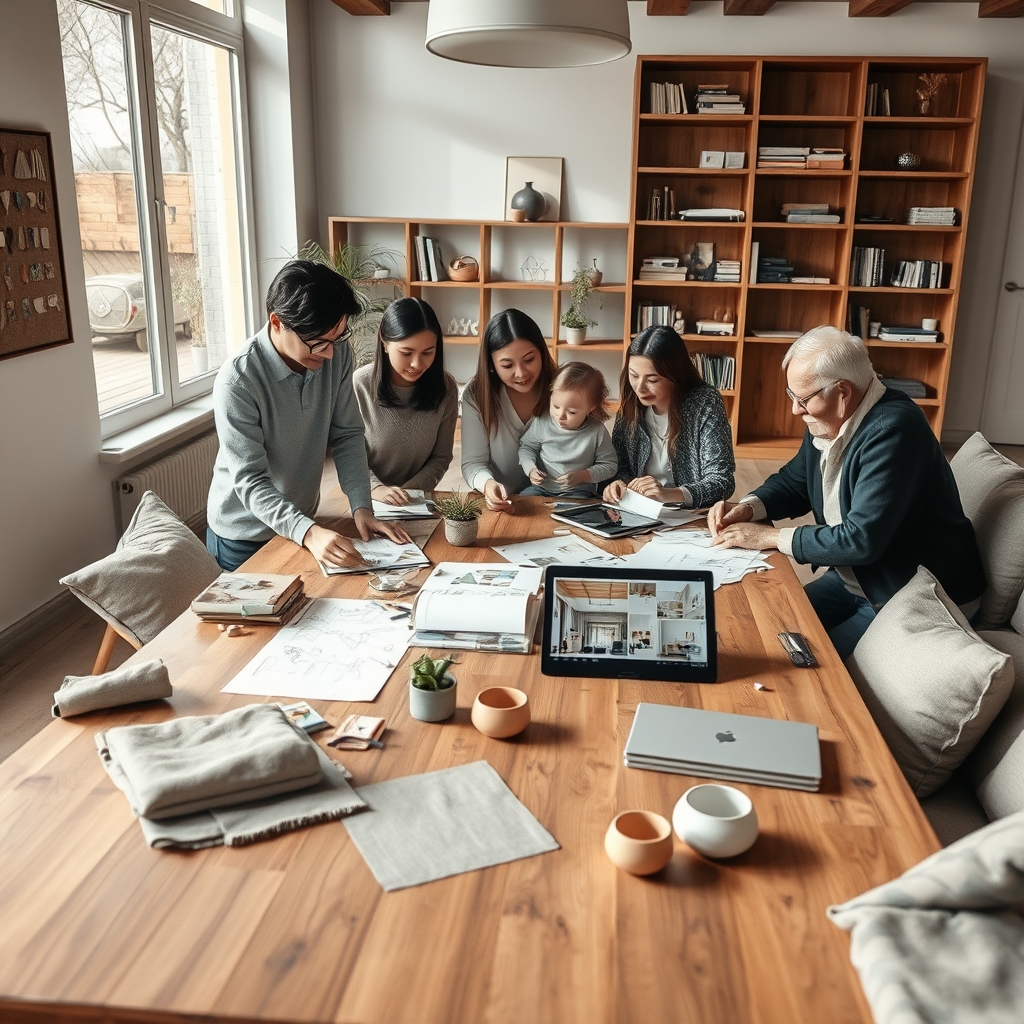
There is a quiet magic in the way a home comes to life—not through rigid blueprints or solitary visions, but through the delicate interplay of voices, experiences, and shared intentions. The most transformative living spaces are not merely built; they are co-created, emerging from a dialogue between designer, inhabitant, and the space itself. This process, often overlooked in favor of aesthetic trends or technological advancements, is where the true soul of a home takes shape. It is here, in the intersection of collaboration and creativity, that spaces transcend their physical boundaries to become extensions of the people who dwell within them.
The Alchemy of Shared Vision
Co-creative design is not a new concept, but its application in modern interior environments has evolved into something far more nuanced than traditional client-designer collaborations. It is a dynamic exchange where the designer acts as both guide and listener, interpreting not just what a client says they want, but what they feel they need. This requires a deep dive into the unspoken—into the rhythms of daily life, the emotional triggers of a space, and the subtle ways in which environments shape mood and behavior.
Consider the process of designing a family home where each member has distinct needs. A parent may prioritize a functional kitchen for meal preparation, while a teenager craves a private nook for creativity, and a young child needs an open play area that feels safe yet stimulating. A co-creative approach doesn’t force these needs into a single mold; instead, it weaves them together, layering textures, lighting, and spatial arrangements to create a harmonious whole. The result is a home that doesn’t just accommodate its inhabitants but celebrates them, reflecting their collective identity in every corner.
The Role of Empathy in Spatial Storytelling
At the heart of co-creative design lies empathy—the ability to step into another’s experience and see the world through their eyes. This is where the invisible threads of a space begin to form. A designer might notice, for instance, that a client lights up when describing a childhood memory tied to a particular color or material. That detail, however small, becomes a cornerstone of the design, infusing the space with personal significance. Similarly, a client’s hesitation when discussing a room’s layout might reveal an underlying discomfort, prompting a reimagining of the space to better align with their emotional needs.
This empathetic approach extends beyond individual preferences to encompass cultural narratives and shared histories. A home designed for a multigenerational family, for example, might incorporate elements that honor ancestral traditions—whether through the use of heirloom textiles, the inclusion of a communal gathering space, or the integration of natural materials that echo a family’s roots. These choices do more than decorate a space; they narrate it, turning walls and floors into a living story that evolves with its inhabitants.
The Dance of Adaptability and Intention
Co-creative design also thrives on adaptability, recognizing that a home is not a static entity but a living, breathing organism that grows and changes alongside its occupants. This is where the principles of flexible living solutions and adaptive living spaces come into play. A co-created home is designed with the future in mind, incorporating modular furniture, movable partitions, and multi-functional zones that can shift to meet new needs. The goal is not just to create a space that works today, but one that can transform tomorrow—whether that means accommodating a growing family, adapting to remote work, or simply evolving with changing tastes.
Yet adaptability alone is not enough. The most resonant spaces are those that balance flexibility with intention, ensuring that every change serves a purpose. This might mean designing a living room that can transition from a quiet reading nook to a social hub with minimal effort, or creating a bedroom that doubles as a workspace without sacrificing its role as a sanctuary. The key lies in understanding the why behind each adaptation—what emotional or practical need it fulfills—and ensuring that the design remains aligned with the inhabitants’ evolving lives.
The Technology of Collaboration
In the digital age, co-creative design has been supercharged by tools that bridge the gap between imagination and reality. Digital twin interior modeling, for instance, allows designers and clients to explore a space in three dimensions before a single wall is moved. This technology enables real-time collaboration, where changes can be visualized, discussed, and refined in an instant. Clients are no longer passive observers; they become active participants in the design process, experimenting with layouts, materials, and lighting to see how each choice shapes the space’s mood and functionality.
Interactive interior planning platforms take this a step further, offering virtual walkthroughs that simulate the experience of moving through a space. These tools don’t just show what a room will look like; they reveal how it will feel. A client can test the acoustics of a living room, the flow of natural light in a kitchen, or the coziness of a reading nook, making adjustments based on sensory feedback rather than abstract measurements. This level of engagement ensures that the final design is not just beautiful, but deeply attuned to the way its inhabitants will live within it.
The Ripple Effect of Co-Created Spaces
The impact of co-creative design extends far beyond the walls of a home. When a space is crafted with intention, empathy, and collaboration, it becomes a catalyst for deeper connections—not just between people and their environment, but between the people themselves. A home designed through this process fosters a sense of ownership and belonging, where every family member, roommate, or guest feels seen and valued. It becomes a place where memories are made, where creativity is nurtured, and where the simple act of living feels more meaningful.
Moreover, co-creative design has the power to challenge traditional hierarchies in the design process, democratizing the way we think about our living spaces. It invites us to move beyond the notion of the designer as a solitary genius and instead embrace a model where expertise is shared, ideas are co-owned, and the final result is a true reflection of collective vision. In this way, the home becomes more than a shelter; it becomes a testament to the power of collaboration, a physical manifestation of what happens when we listen deeply, adapt thoughtfully, and create together.
There is a quiet revolution unfolding in the way we design our living spaces, one that prioritizes connection over perfection, empathy over aesthetics, and collaboration over control. It is a shift that asks us to see our homes not as static backdrops to our lives, but as dynamic participants in them—spaces that grow, adapt, and resonate with the people who call them home. And in this revolution, the most beautiful homes are not the ones that follow the latest trends, but the ones that tell the truest stories, woven from the threads of shared experience and co-created dreams.



