Interactive Interior Planning: The Future of Personalized and Adaptive Home Design
In an era where technology seamlessly blends with daily life, the concept of home design is undergoing a transformative shift. No longer are interiors static, one-size-fits-all spaces; they are evolving into dynamic, responsive environments that adapt to the unique needs and preferences of their inhabitants. At the heart of this evolution lies interactive interior planning, a revolutionary approach that merges cutting-edge technology with human-centric design principles to create living spaces that are as intuitive as they are inspiring.
The Rise of Interactive Interior Planning
Interactive interior planning is more than just a trend—it’s a paradigm shift in how we conceptualize and experience our living spaces. Unlike traditional design methods, which often rely on fixed layouts and pre-determined aesthetics, interactive planning empowers homeowners to engage with their spaces in real-time. Through the use of augmented reality (AR), virtual reality (VR), and advanced digital modeling tools, individuals can now visualize, modify, and personalize their interiors before a single piece of furniture is moved or a wall is painted.
This approach democratizes design, making it accessible to everyone, regardless of their expertise. Whether it’s rearranging furniture in a virtual living room, experimenting with different color palettes, or testing out various lighting scenarios, interactive planning tools allow users to explore endless possibilities with just a few clicks. The result? A home that is not only functional but also deeply reflective of the occupant’s personality, lifestyle, and aspirations.
Technology as the Catalyst for Personalization
The backbone of interactive interior planning is technology. Digital twin modeling, for instance, creates a virtual replica of a physical space, enabling designers and homeowners to simulate changes and assess their impact before implementation. This level of precision ensures that every design decision—from the placement of a sofa to the selection of materials—is informed by data and tailored to the user’s needs.
Artificial intelligence (AI) further enhances this process by analyzing user preferences, behaviors, and even emotional responses to different design elements. For example, AI-driven platforms can suggest layouts that optimize psychological space, ensuring that rooms feel open, inviting, and aligned with the occupant’s mental well-being. Similarly, smart home systems can adapt lighting, temperature, and acoustics in real-time, creating an environment that responds dynamically to the user’s mood and activities.
Bridging the Gap Between Aesthetics and Functionality
One of the most compelling aspects of interactive interior planning is its ability to balance aesthetics with functionality. Traditional design often forces a trade-off between beauty and practicality, but interactive tools eliminate this dilemma by allowing users to test and refine their ideas in a virtual space. For instance, a homeowner can experiment with biophilic design elements—such as indoor plants, natural materials, and water features—to create a serene, nature-inspired environment while ensuring that the space remains functional and easy to maintain.
Moreover, interactive planning facilitates the integration of flexible living solutions, such as modular furniture and adaptable layouts, which can evolve alongside the user’s changing needs. A young professional’s studio apartment, for example, can be designed to transform into a family home with minimal effort, thanks to smart design choices made possible by interactive tools.
The Human Element: Co-Creative Design Processes
While technology plays a pivotal role in interactive interior planning, the human element remains at its core. Co-creative design processes, where designers and homeowners collaborate closely, ensure that the final space is not only technologically advanced but also emotionally resonant. This collaborative approach fosters a sense of ownership and connection, making the home a true reflection of its inhabitants.
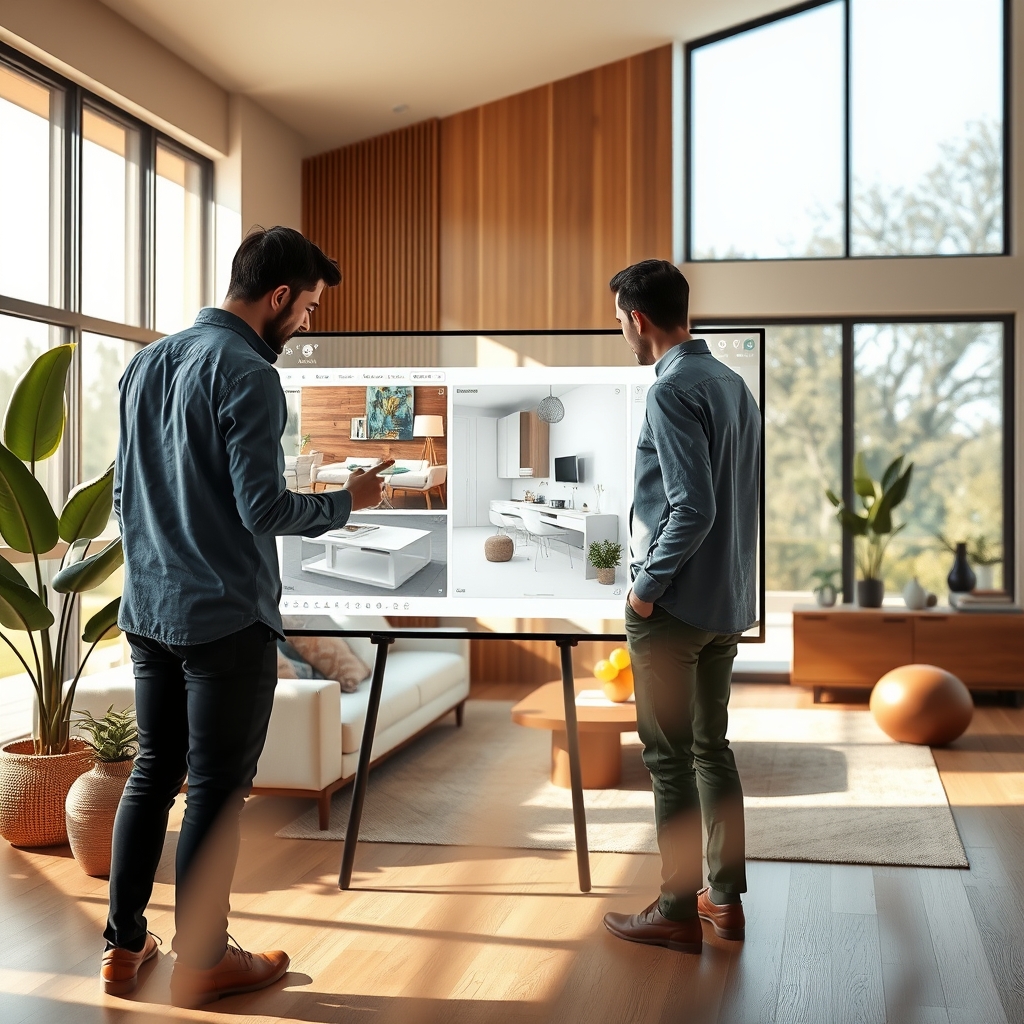
For instance, a designer might use interactive tools to present multiple design options to a client, allowing them to provide feedback and make adjustments in real-time. This iterative process ensures that the final design aligns perfectly with the client’s vision, while also incorporating the designer’s expertise in spatial optimization, material selection, and aesthetic cohesion.
Sustainability and Conscious Material Selection
Interactive interior planning also aligns with the growing demand for sustainable and eco-conscious design. By simulating different material choices and their environmental impact, homeowners can make informed decisions that reduce their carbon footprint without compromising on style. For example, a digital twin model can demonstrate how reclaimed wood, recycled metals, or low-VOC paints will look and perform in a space, empowering users to prioritize sustainability in their design choices.
Additionally, interactive tools can help optimize energy efficiency by modeling natural light patterns, ventilation systems, and smart thermostats. This holistic approach ensures that the home is not only beautiful and functional but also environmentally responsible.
The Future of Home Design: A Seamless Blend of Technology and Intuition
As interactive interior planning continues to evolve, it promises to redefine the way we think about and interact with our living spaces. The future of home design lies in creating environments that are not only visually stunning but also deeply intuitive—spaces that anticipate our needs, adapt to our lifestyles, and evolve with us over time. By leveraging technology to enhance human creativity and collaboration, interactive planning is paving the way for homes that are truly personalized, sustainable, and emotionally resonant.
The beauty of this approach lies in its ability to transform the abstract into the tangible. No longer do we have to imagine what a space could be; we can now experience it, shape it, and make it our own before it even exists. In doing so, interactive interior planning is not just changing how we design our homes—it’s changing how we live in them, fostering a deeper connection between people and the spaces they inhabit. As we move forward, the fusion of technology and design will continue to unlock new possibilities, making our homes more adaptable, more sustainable, and more reflective of who we are than ever before.