
Smart Home Lighting: How to Create Ambiance with Smart Bulbs
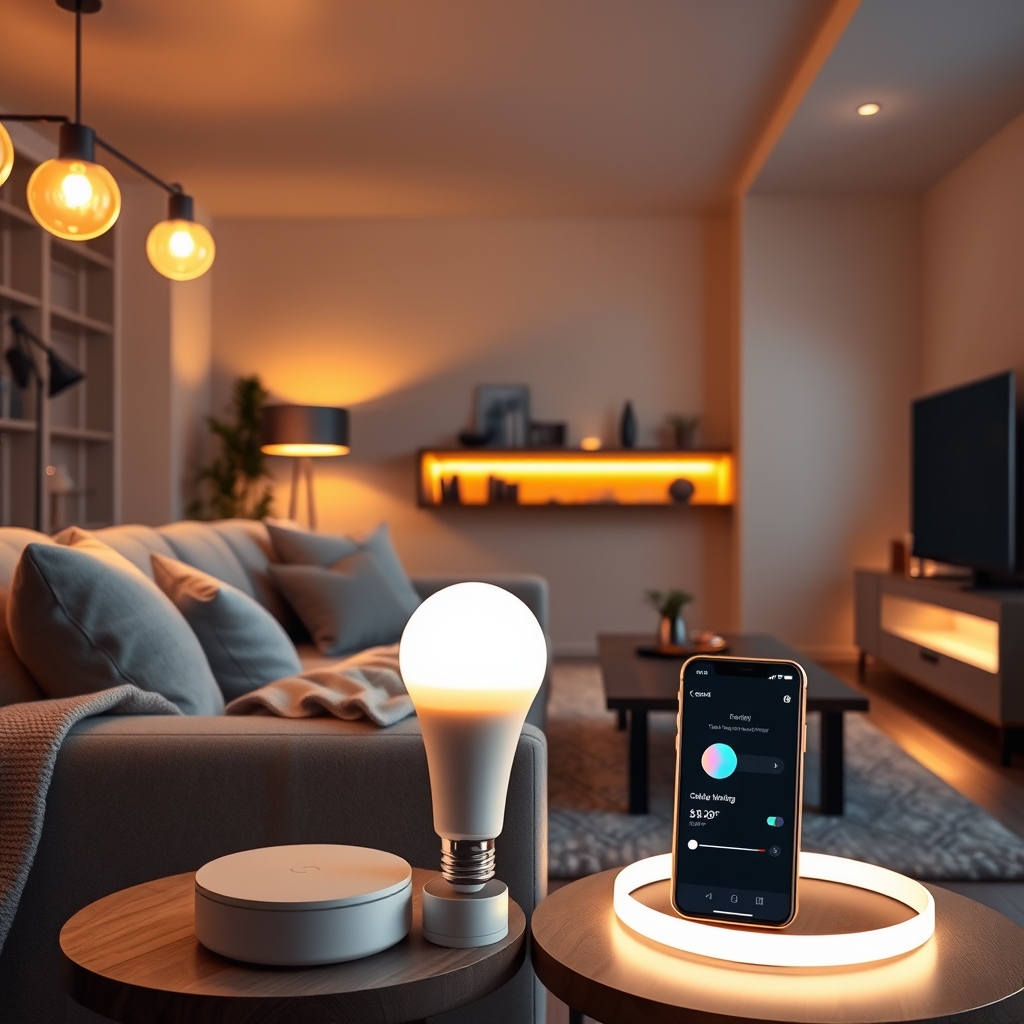
Lighting does more than illuminate a room—it shapes the mood, defines the space, and transforms the ordinary into the extraordinary. With smart home lighting, you have the power to craft the perfect ambiance at the touch of a button or even with a simple voice command. Whether you want to create a cozy evening retreat, a vibrant space for entertaining, or a productive environment for work, smart bulbs offer endless possibilities to enhance your home’s atmosphere. Here’s how you can master the art of ambiance with smart lighting.
The Power of Color Temperature
One of the most transformative features of smart bulbs is their ability to adjust color temperature. Measured in Kelvin (K), color temperature ranges from warm (2000K-3000K) to cool (4000K-6500K). Warm light, with its soft yellow and orange hues, creates a relaxing and inviting atmosphere, perfect for living rooms and bedrooms. On the other hand, cool light, which mimics daylight, is ideal for kitchens, home offices, and bathrooms, where clarity and focus are essential.
Experimenting with color temperature can dramatically alter the feel of a room. For instance, dimming the lights to a warm 2200K in the evening can signal to your body that it’s time to wind down, while a cooler 4000K in the morning can help you feel more alert and energized. Many smart bulbs allow you to adjust the color temperature manually or set it to change automatically throughout the day, aligning with your natural circadian rhythm.
Choosing the Right Bulbs for Your Needs
Not all smart bulbs are created equal, and selecting the right one depends on your specific needs. If you’re looking for versatility, consider bulbs that offer a full spectrum of colors, such as those from Philips Hue or LIFX. These bulbs can produce millions of colors, allowing you to set the perfect mood for any occasion—whether it’s a romantic dinner with deep reds or a lively party with vibrant blues and greens.
For those who prefer a more subtle approach, white-only smart bulbs, like those from Wyze or TP-Link, offer adjustable color temperatures without the full color spectrum. These bulbs are often more affordable and can be a great entry point into smart lighting. Additionally, pay attention to brightness, measured in lumens. A bulb with higher lumens will provide more light, which is useful for task lighting, while lower lumens are better for creating a soft, ambient glow.
Scheduling for Seamless Ambiance
One of the greatest advantages of smart lighting is the ability to automate your home’s ambiance. With scheduling features, you can program your lights to turn on or off at specific times, adjust brightness, or even change colors throughout the day. This not only enhances convenience but also helps create a consistent atmosphere without any effort on your part.
For example, you can set your living room lights to gradually brighten in the morning, simulating a sunrise and helping you wake up naturally. In the evening, you can schedule the lights to dim and shift to a warmer tone, preparing your body for sleep. Many smart lighting systems also offer geofencing, which automatically turns lights on or off based on your location. This ensures that your home is always lit just the way you like it, whether you’re arriving home after dark or leaving for work in the morning.
Creating Scenes for Every Occasion
Scenes are pre-set lighting configurations that allow you to instantly transform a room with a single command. For instance, you can create a “Movie Night” scene that dims the lights to a soft blue hue, or a “Dinner Party” scene that bathes the room in warm, golden light. Most smart lighting systems, such as those from Nanoleaf or SmartThings, allow you to customize and save multiple scenes, making it easy to switch between different moods with just a tap on your smartphone or a voice command to your smart assistant.
Scenes can also be tied to specific activities or times of day. For example, a “Morning” scene could brighten the kitchen and bathroom lights to help you start your day, while a “Relax” scene could dim the lights in the living room and bedroom for a calming evening wind-down. The possibilities are endless, and with a little creativity, you can design scenes that perfectly match your lifestyle.
Integration with Other Smart Home Devices
Smart lighting truly shines when it’s integrated with other smart home devices. By connecting your smart bulbs to a central hub like Amazon Alexa, Google Home, or Apple HomeKit, you can create a cohesive and intuitive smart home ecosystem. This allows you to control your lights alongside other devices, such as smart thermostats, security cameras, and speakers, all through a single app or voice command.
For example, you can set up a routine that turns on your smart lights, adjusts the thermostat, and plays your favorite playlist when you say, “Good morning.” Or, you can create a “Goodnight” routine that turns off all the lights, locks the doors, and sets the security system. Integration also enables more advanced features, such as syncing your lights with your smart TV or gaming console. Imagine your living room lights pulsing in time with the action on screen or changing colors to match the game you’re playing—this level of immersion takes entertainment to a whole new level.
Voice Control and Smart Assistants
Voice control is one of the most convenient features of smart lighting. With a smart assistant like Alexa, Google Assistant, or Siri, you can adjust your lights without ever lifting a finger. Simply say, “Alexa, dim the living room lights to 30%,” or “Hey Google, set the bedroom lights to warm white,” and your lights will respond instantly. Voice control is especially useful when your hands are full or when you’re in another room and want to adjust the lighting without getting up.
Smart assistants can also be used to trigger scenes or routines. For example, you can say, “Alexa, activate Movie Night,” and your lights will automatically dim to the perfect level for watching a film. Or, you can say, “Hey Google, I’m leaving,” and your lights will turn off, along with any other connected devices. The convenience of voice control makes it easy to create the perfect ambiance with minimal effort.
Smart home lighting is more than just a convenience—it’s a tool for transforming your living space into a dynamic and responsive environment. By understanding the nuances of color temperature, leveraging scheduling and automation, and integrating your lights with other smart devices, you can create an ambiance that adapts to your needs and enhances every moment of your day. Whether you’re looking to boost productivity, set the mood for a special occasion, or simply make your home feel more welcoming, smart bulbs offer the flexibility and control to bring your vision to life. The key is to experiment, explore, and let your creativity guide you as you design a lighting scheme that truly reflects your style and enhances your daily life.



